Apex Critical Metals reported significant high-grade rare earth mineralization at its Rift project, enhancing its position among North America's top rare earth discoveries.
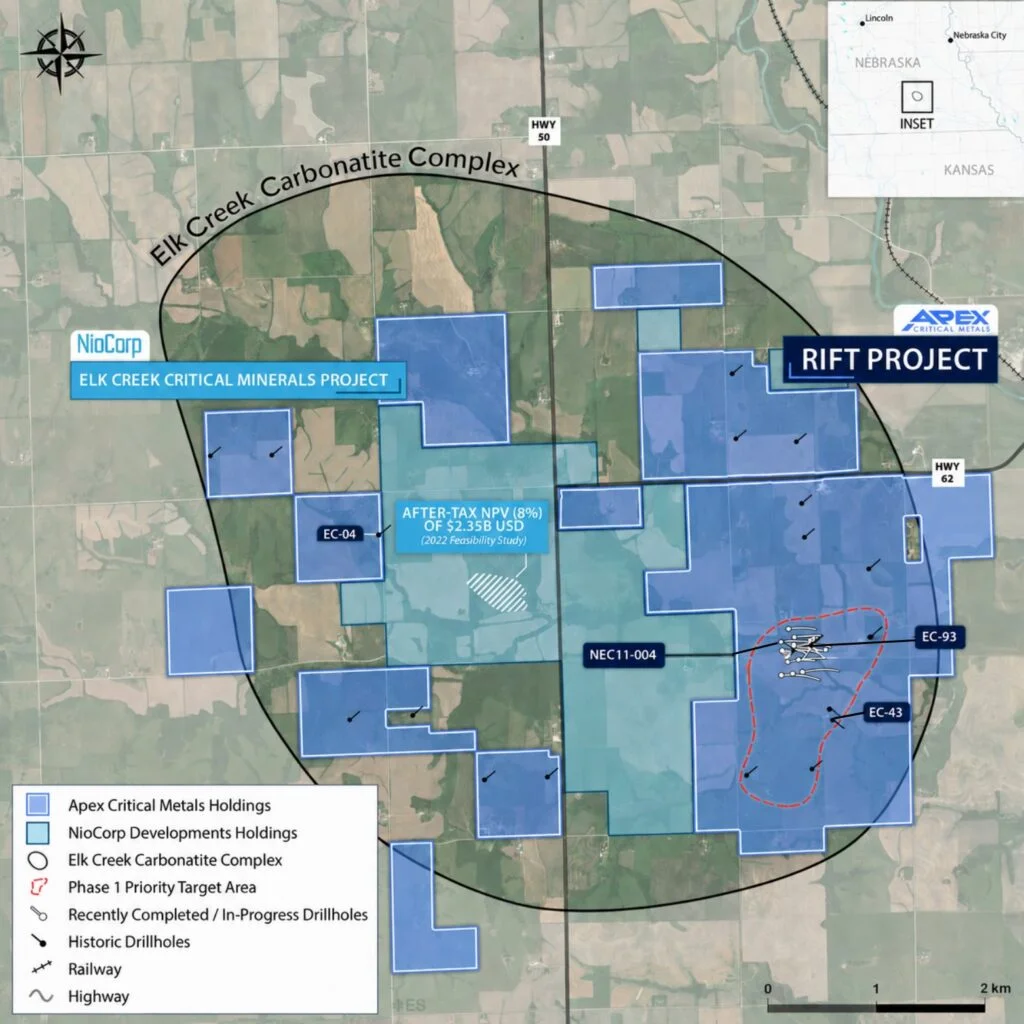
Apex Critical Metals (CSE: APXC; US-OTC: APXCF) has demonstrated substantial potential at its Rift project in southeastern Nebraska, with several new drilling results exceeding 4% total rare earth oxides (TREO). The latest assays feature notable intercepts, including 10.2 meters that graded 5.27% TREO from a depth of 178.6 meters in hole RIFT26-14 and 8 meters grading 4.48% REO at 273 meters in hole RIFT26-12. Both results come from mineralized segments roughly 150 meters long, each averaging over 2% TREO.
CEO Perspectives and Mineral Resource Projections
CEO Sean Charland described these results as the company’s “best grade x width results south of the discovery area.” His confident appraisal suggests that the findings bolster the company’s momentum and strengthen its operational strategy. This consistent improvement in data hints at a mineral resource estimate that is anticipated not too long from now, expected in the first quarter of 2027. This timeline signals not just a potential boon for Apex, but also reflects a growing investor interest in the rare earth sector amid rising commodity prices.
Charland's view on the shallow, west-dipping Trinity Zone reveals a strategic understanding of the geology at play. If drilling continues to yield favorable results, it may redefine the company's place in the competitive landscape of rare earth mining in North America, where high-quality deposits are critical to meeting the demands of tech giants and the burgeoning EV sector.
Emerging Competitors and Market Context
Apex's stock performance has reflected the excitement surrounding these developments. The share price rose by 7.6% to $1.28 mid-Wednesday, pushing the company's market capitalization above $123 million. This is a significant swing when you consider its fluctuation over the past year, ranging from $1.02 to $4.95. Such volatility often leads to opportunities, but also challenges as investors remain wary of the underlying factors driving price changes.
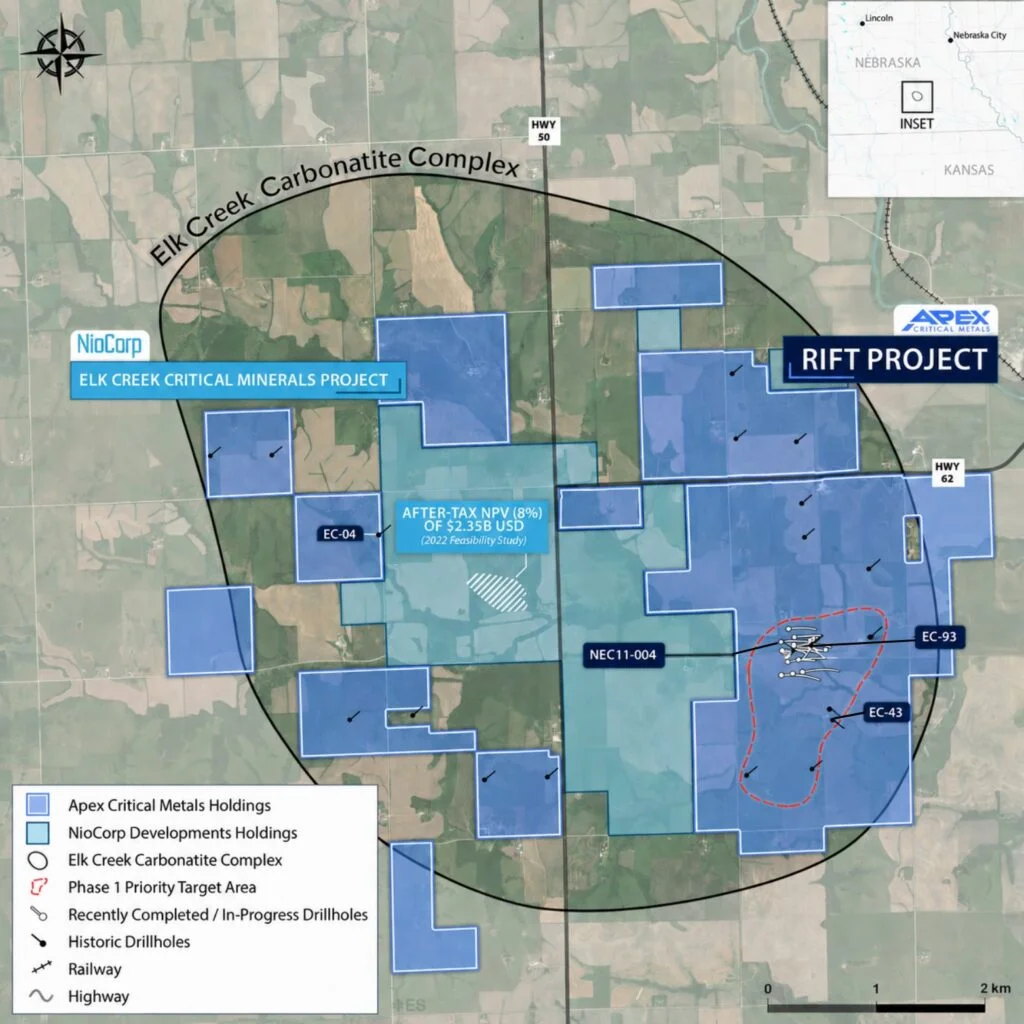
The Rift project joins a select group of both U.S. and Canadian rare earth ventures, notably including MP Materials’ (NYSE: MP) producing Mountain Pass mine in California, and Defense Metals’ (TSXV: DEFN; US-OTC: DFMTF) Wicheeda project in British Columbia. The emergence of players like Ucore Rare Metals (TSXV: UCU; US-OTC: UURAF), with its planned rare earth separation facility in Louisiana, illustrates a critical pivot towards strengthening domestic supply chains. Could Apex’s timely advances propel it into this elite circle of producers?
In the broader sector context, Apex’s recent assay results build on an impressive trajectory established from April to July. Among these significant finds was RIFT26-002, revealing an extensive 81.6 meters at 2.02% REO from 221.2 meters depth; RIFT26-005A reporting 137.2 meters at 2.01% REO from 252.6 meters; and RIFT26-008, intersecting 191.9 meters at 2.5% REO, showcasing high-grade sections that further accentuated the project's potential.
Insights into High-Value Zones
Drilling efforts have also pinpointed a zone rich in neodymium and praseodymium (NdPr), elements known for their integral role in the manufacture of high-strength magnets used in various advanced technologies. Hole RIFT26-002 recorded an impressive average of 49% NdPr over 10 meters at a grade of 0.75% REO. Subsequent drilling has expanded this enriched horizon to spans exceeding 120 meters. These findings point to a favorable geological environment for rare earth element concentration, which analysts often regard as a key element in increasing a project's overall economic viability.
The mineralization at Rift extends over a strike length of more than 700 meters and remains open in multiple directions. Apex’s current drilling strategy focuses on broadening the mineral footprint ahead of the anticipated resource delineation. Each new exploration might unravel deeper insights into this promising mineral bounty, potentially transforming community engagement in Nebraska as production plans begin to take shape.
As global demand surges for rare earth elements outside of China, sectors like artificial intelligence, electric vehicles, and renewable energy are becoming increasingly reliant on securing stable and responsible supply routes. Rift’s progress reflects a mounting urgency to establish domestic supply chains for these critical materials, illustrating how regional projects can fit into the broader economic puzzle of reducing reliance on single-source imports.
Implications and Future Outlook
What this means for you is clear: the future of rare earths is not just about extraction anymore; it’s about building a resilient supply chain. If you're working in this space, understanding the dynamics influencing Apex's Rift project could provide valuable insights. With ongoing drilling and evolving assay results, it’s possible we’re on the brink of a significant breakthrough in North America’s rare earth supply strategy.
While the enthusiasm surrounding Apex might be justified, prospective investors should be cautious. Stock performance can be influenced by factors that include geopolitical tensions, environmental scrutiny, and commodity price fluctuations. (And this is the part most people overlook.) As Apex approaches its expected resource estimate, keeping a keen eye on both market conditions and regulatory landscapes will be essential for gauging its long-term prospects.
Discussion
Sign in to join the discussion.