Gold and silver prices climb following a surprising drop in US jobs, while Barrick's latest deal leaves investors concerned about asset valuations.
Gold prices held strong near their highest levels since mid-June, while silver surged to a seven-week high, as market sentiments reacted to unexpected contractions in US employment. The belief that a September interest rate hike is now unlikely has bolstered demand for both precious metals.
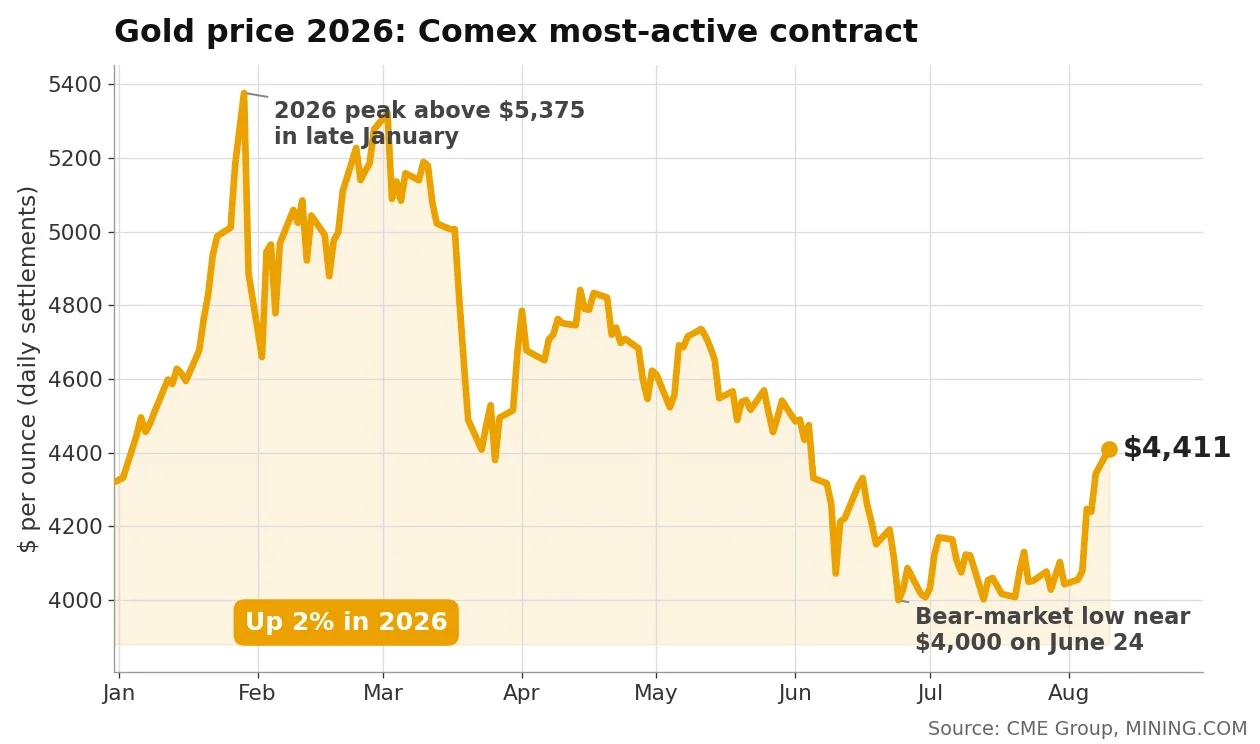
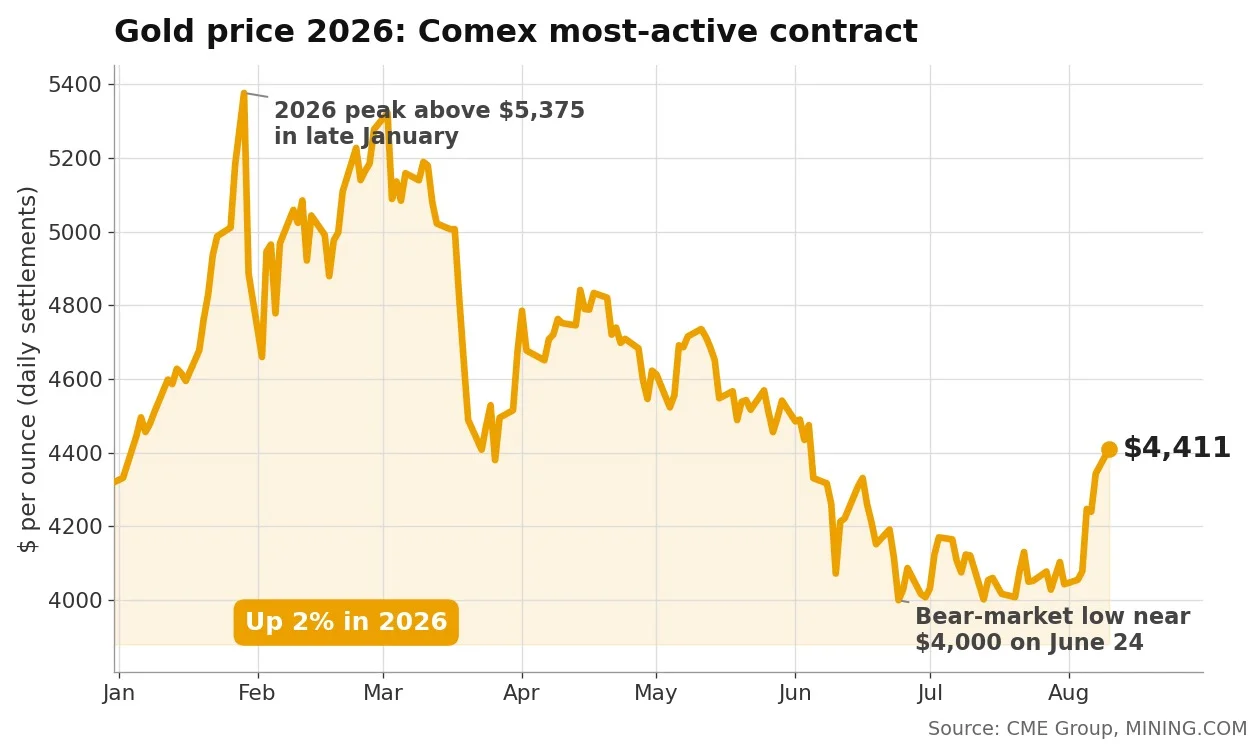
The December gold contract on the Comex reached $4,421.50 per ounce early in the trading session, marking its peak since mid-June, and remained 0.3% higher at $4,411.20 as midday approached in New York. Spot gold increased by 0.4%, settling at $4,357.11. This performance follows a significant rise last week, where gold prices jumped more than 7%, representing the steepest weekly gain since January.
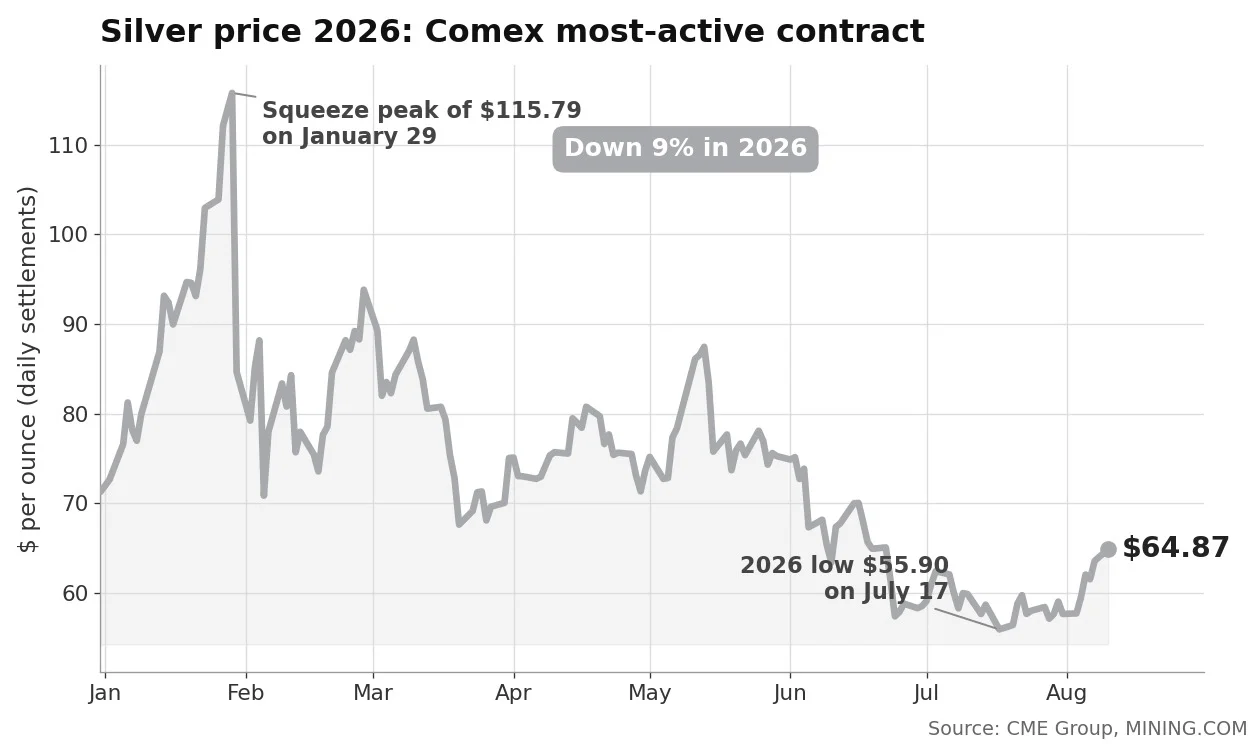
Silver prices showed even steeper growth, with the September contract rising 2.5% to hit $65.075 an ounce—the first time the metal has surpassed $65 in seven weeks—before settling at $64.87, up 2.2% for the day. Spot silver similarly rose, reaching $64.94, pushing its weekly increase to over 12%. In contrast, platinum and palladium prices declined.
Silver's Strong Performance
Silver's rebound is notable, especially compared to gold's recovery from mid-July lows below $56. Demand appears to be strengthening as the market anticipates continued deficits through 2026. For instance, Perth Mint reported a 65% surge in silver product sales in July, totaling 486,043 ounces. Despite this, silver prices are still down 9% year-to-date, a reflection of earlier market volatility in 2023.
Barrick Mining's Downturn
Barrick Gold experienced significant stock declines, dropping as much as 9.7% during early New York trading—the steepest drop since March. Shares were down 6.5% by midday due to investor skepticism over the recent $1.95 billion settlement that merged its Fourmile discovery into the Nevada Gold Mines joint venture. Analysts question whether the deal's valuation, seen as approximately $325 an ounce, adequately reflects the asset’s quality and potential.
In their evaluations, Bloomberg Intelligence analysts suggested the terms appear to favor Newmont, which secured a financial advantage in the transaction. Investor estimates had previously valued Fourmile between $10 billion and $20 billion, suggesting Newmont's share should have been much more lucrative. Barrick has touted this discovery as among the century’s most significant, with an annual production potential of up to 750,000 ounces.
The settlement also addresses a contentious dispute that had flared up between Barrick and Newmont, including allegations of mismanagement within their joint venture. Compounding investor concerns, Barrick's second-quarter earnings fell short of projections, influenced by rising operational costs and penalties in Mali, even as gold production rose 11% sequentially.
In contrast, Newmont's stock showed resilience after the deal, rising by 2.9%. Other mining stocks exhibited mixed reactions, with Agnico Eagle staying flat and Wheaton Precious Metals slipping by 1.1%, while silver-related equities enjoyed a boost—with Hecla rising 3.1%, Coeur by 3.2%, and Buenaventura by 1.1%.
Market Focus Shifts to Inflation Data
The recent jobs report has significantly impacted market expectations for interest rates, reducing the likelihood of a September increase as Federal Reserve officials consider strategies to combat inflation in the current geopolitical climate. This coming week, attention will pivot to consumer price data, set for release on Wednesday, with a modest uptick of 0.1% anticipated after a surprising 0.4% decline in June.
“The market is closely monitoring the inflation and producer price index figures this week, which will influence interest-rate expectations and have implications for gold pricing,” noted commodity analyst Manav Modi from Motilal Oswal Financial Services.
Meanwhile, the rising crude oil prices, following Middle Eastern geopolitical tensions, continue to add complexity for monetary policymakers. With Brent crude nearing $86 per barrel and influenced by ongoing negotiations around the Strait of Hormuz, market dynamics remain tenuous. This environment has pushed 10-year Treasury yields up to 4.68%, which in turn has buoyed the dollar, ultimately constraining gold’s upward momentum.
Despite recent gains, gold prices are still approximately 20% lower than pre-war levels reached last February, indicating ongoing market volatility.
Speculators appear to be responding, with reports showing money managers expanded their net-long positions in Comex gold contracts by over 15,000 in the week ending August 4, marking their largest stance in more than six months. Additionally, gold-backed ETFs in China have consistently seen inflows, reflecting a sustained appetite for the metal. The People’s Bank of China also added 640,000 ounces to its reserves in July, continuing a streak of buying that has persisted for 21 months.
With current trends, gold pricing remains relatively stable for 2026 after experiencing fluctuations, including a notable peak above $5,375 in January and a subsequent bear-market dip near $4,000 in late June.
(With contributions from Bloomberg)
Discussion
Sign in to join the discussion.