Should there be a breakdown of CUSMA, Canada risks losing over 100,000 jobs, emphasizing the need for clarity in trade agreements.
The potential collapse of the Canada-United States-Mexico Agreement (CUSMA) poses a significant threat to Canada’s employment landscape, with estimates suggesting a loss of about 102,000 jobs, according to the Canadian American Business Council (CABC). The repercussions of such a scenario would ripple through numerous sectors, particularly manufacturing. This situation isn't merely hypothetical; it's a pressing concern for workers and businesses alike as the agreement has been crucial for trade flow between the three countries.
Job Loss Projections
The CABC's report highlights that a successful renegotiation of CUSMA could generate an additional 98,000 jobs in Canada and 137,000 jobs in the U.S. by 2027 compared to the current agreement. In stark contrast, a breakdown would result in job losses of 102,000 in Canada and 214,000 in the U.S., with substantial implications for both economies. These numbers illustrate a stark reality: the stakes are high, and the choices made in the coming months could fundamentally reshape job availability across North America.
Sectoral Vulnerabilities
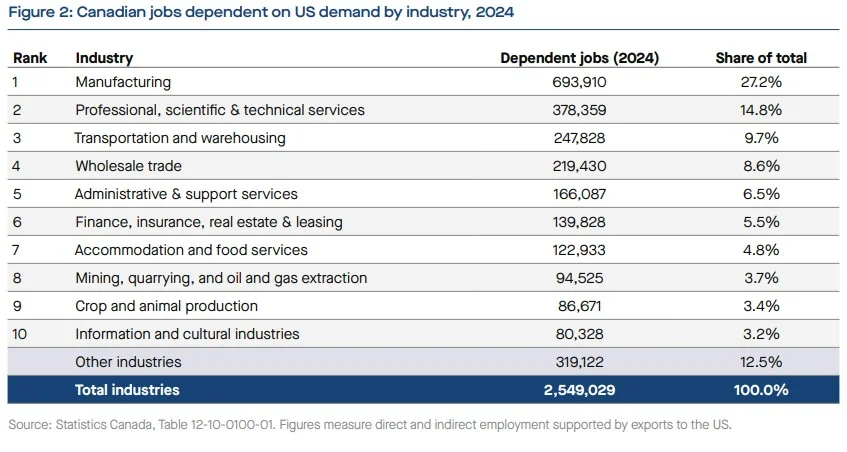
Manufacturing industries are expected to bear the brunt of job losses due to tariff escalations, with the service sector also affected. Tariffs can create a ripple effect; as production costs rise, manufacturers may cut jobs to maintain profit margins, impacting a range of related sectors, including transportation, construction, and professional services. **If you're working in this space, it's critical to understand how interconnected these industries are.** The CABC illustrates that the economic stakes are particularly high for provinces like Ontario, Quebec, Manitoba, and New Brunswick, which are heavily reliant on automotive, metals, and machinery manufacturing. These provinces combine for a disproportionate amount of Canada’s manufacturing output, heightening their vulnerability to policy shifts.
Both Ontario and Quebec stand out as the biggest beneficiaries if negotiations succeed but will sustain significant damage if tariffs rise. The report emphasizes that Canada's stronger dependency on bilateral trade means that the effects of tariffs could be four to six times more pronounced than in the U.S. This could lead to a severe erosion of jobs in these provinces, which are already wrestling with various other economic pressures.
Importance of Predictability
Amid ongoing negotiations, CABC CEO Beth Burke noted that businesses on both sides of the border are craving clarity as trade discussions continue. The outcomes of these negotiations are poised to shape North America's economic landscape for the long term. Burke stated, "The choices made today will determine North America's economic competitiveness for decades to come." Predictability in trade agreements appears essential for fostering a stable business environment, something that's increasingly elusive given the current climate. The uncertainty can stifle investment decisions, as companies may opt to wait-and-see rather than commit to long-term strategies or expansion plans. That said, stable trade agreements have historically been a bedrock for business planning and growth.
Economic Impact on Households
The analysis quantifies that opting for a successful renegotiation rather than a breakdown could translate to approximately US$516 in savings for U.S. households and C$846 for Canadian households each year. These figures aren't just numbers; they reflect potential real-world impacts that can alter financial trajectories for families, impacting everything from educational expenses to retirement savings. Furthermore, the report foresees that inflation tied to tariffs could linger for up to ten years following a breakdown scenario, exacerbating financial pressures on households. This situation could lead to a prolonged period of economic instability for average citizens, particularly those already facing financial struggles.
As negotiations progress, Canada has formally requested a 16-year renewal of CUSMA to combat ongoing trade instability. However, after the July 1 deadline passed without agreement, U.S. officials declined to extend the pact, further contributing to an unsettling environment for Canadian businesses. The Bank of Canada has linked this uncertainty to a decline in business investment over five consecutive quarters, raising concerns about long-term economic growth. **And this is the part most people overlook:** how trade agreements aren't just about numbers and deals. They intersect deeply with the everyday lives of citizens.
Implications for the Future
The ongoing negotiations surrounding CUSMA represent more than just a trade deal; they're a barometer for the future of North American economic integration. That said, if the negotiations don't yield favorable outcomes, the implications could ripple through various sectors and threaten the stability of employment across the region. Workers in manufacturing and related industries could find themselves in precarious positions, forced into job searches in a potentially tougher labor market.
Moreover, the current uncertainties may persuade businesses to consider diversifying their supply chains, which could reshape trade patterns and alliances. The potential shift could also elevate tensions in other trade relationships, especially given the intertwined nature of global markets today. What this means for you, particularly if you’re in the business sector, is that now is the time to prepare for various scenarios, whether that involves rethinking supply chains, seeking new markets, or adjusting product lines. The outcome of CUSMA negotiations will have long-lasting effects, and being proactive can help mitigate risks associated with any potential fallout.
Discussion
Sign in to join the discussion.