Two insurers are in conflict over liability coverage for a hi-rail truck accident, with a court to determine which policy is applicable.
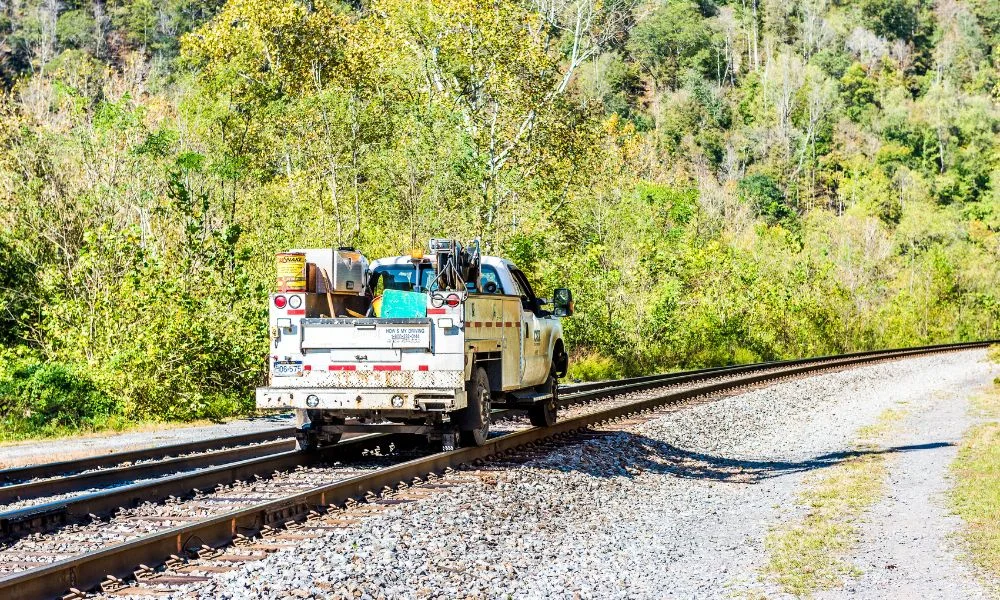
In a contentious case emerging from an Alabama road incident, two insurance companies are seeking judicial clarification regarding their liability coverage responsibilities. This dispute revolves around a collision involving a hi-rail truck, which allows vehicles to operate on railroad tracks. Such incidents aren't uncommon; however, the complexities of insurance policies in these unique scenarios can often lead to protracted legal battles.
The Incident and Initial Legal Actions
The legal confrontation was ignited following a lawsuit filed by Indian Harbor Insurance Company on August 10, 2026. The company contends it should not be financially responsible for a mishap that occurred around August 7, 2023, involving a Southern Design and Materials, Inc. employee operating a hi-rail truck. This type of vehicle, essential for the functionality of highway and rail operations, blurs the lines between traditional automotive and railway liability frameworks. The situation escalated when this employee's vehicle collided with another hi-rail truck that had stopped on a railroad crossing, leading to injuries and a subsequent lawsuit in state court against the driver and company.
Insurance Companies at Odds
Both Indian Harbor and State Farm, involved as the insurers, are in a standoff, each claiming the other is responsible for covering the incident. Indian Harbor's policy with Southern Design and Materials includes a general commercial liability component that allows for a $1 million limit per occurrence and a $2 million aggregate. Conversely, State Farm provided an auto policy for the truck, also with a limit of $1 million. The stakes are high, as the financial implications of this case could influence future handling of similar insurance claims and disputes.
The crux of Indian Harbor's argument lies in an auto exclusion clause present in its policy. This clause stipulates that coverage doesn't extend to bodily injuries arising from the ownership or use of any vehicle categorized under their definition of "auto." The truck's design for travel on public roads and its compliance with Alabama's liability insurance requirements support Indian Harbor's position that it falls within this exclusion. Such clauses are not unusual; many insurance companies incorporate them as a means to limit exposure to claims associated with vehicles, which are typically subject to more stringent regulations.
The State Farm Perspective
Contrastingly, State Farm approaches the situation by emphasizing an exclusion related to equipment mounted on the vehicle. According to its interpretation, the wheels enabling the truck's dual functionality as a rail vehicle fall under this equipment exclusion. It's a fine line—State Farm has previously indicated to Southern Design that the incident is not covered under its policy based on these grounds. This raises an interesting discussion about the definitions in insurance contracts. What constitutes "equipment" in a policy? It might seem trivial, but these distinctions drive the contention.
Arguments and Counterarguments
Indian Harbor is challenging this viewpoint, asserting that the accident stemmed from the truck itself rather than any auxiliary equipment. They're looking at how the wheels aren't merely add-ons but integral to the truck's functionality for road maintenance. This argument attempts to place the incident within an exception to the exclusion, which could entirely shift the responsibility for damages.
The dispute over which policy is primary complicates matters. Indian Harbor claims that if both policies are deemed applicable, then State Farm's auto coverage should act as the primary coverage, rendering Indian Harbor’s policy as secondary or excess. In ordinary cases, determining the primary insurer is a straightforward exercise; here, however, the ambiguity in vehicle classification introduces a level of legal complexity not often seen in standard auto accidents.
Ongoing Defense and Future Implications
As the situation unfolds, both insurance companies are currently defending their positions, albeit under a reservation of rights. Indian Harbor is actively defending the company and driver while reserving its rights concerning coverage obligations. State Farm is also engaging independent legal counsel for the defense, maintaining its own reservations regarding the interpretations of coverage. This dual defense can complicate judicial review since both parties are essentially recognizing that the terms of their respective policies may create overlapping liabilities.
As of now, the allegations presented in Indian Harbor's complaint remain untested in court. The situation demands judicial determination regarding the insurance coverage and the corresponding responsibilities to defend against the claims associated with this incident.
What’s at Stake?
The implications of this case extend beyond just two companies’ bottom lines. If the court sides with one insurer over the other, it could set a precedent impacting numerous similar cases in the future. Courts often look to past rulings to guide current interpretations of policy language, which means the decision here could reverberate through the insurance industry. Particularly for companies providing coverage for multi-functional vehicles like hi-rail trucks, the future of liability insurance may hinge on how such complexities are navigated. If you're working in this space, you might want to keep an eye on this case. It illustrates the intricate interplay of liability and insurance coverage that can often be overlooked until a significant incident occurs. That’s the part most people overlook—how vague definitions can lead to significant disputes.
In summary, the outcome of this legal battle may reveal just how far the boundaries of standard insurance policies stretch when new vehicle technology is involved, making it a case worth watching closely.
Discussion
Sign in to join the discussion.