The grounding of the Caroline Bezengi off Oman has triggered a massive oil spill while exposing significant vulnerabilities in the marine insurance market.
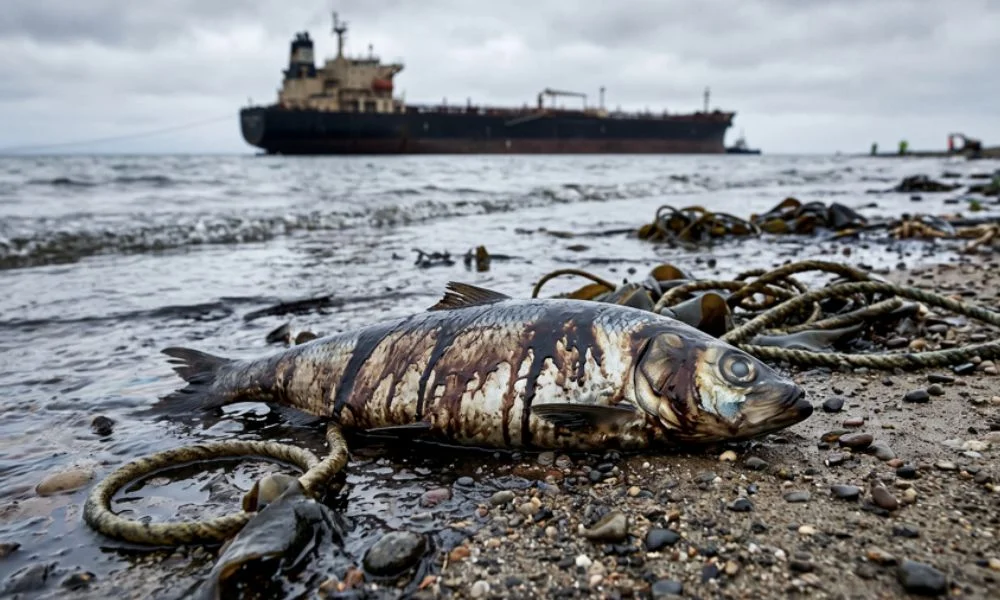
A Suezmax tanker named Caroline Bezengi has been stranded on the rocks of Al Qibliyyah, part of Oman's Hallaniyat Islands, since June, resulting in a catastrophic oil spill that is now estimated to cover around 390 square kilometers—an area larger than Malta. Despite this alarming environmental crisis, no one has claimed responsibility for the vessel, and no insurer has come forward to initiate cleanup efforts. This situation brings to light the considerable risks and deficiencies in marine insurance associated with vessels tied to sanctioned Russian oil.
Current Condition and Background of the Caroline Bezengi
The 274-meter vessel, which has a deadweight tonnage of 160,000, was built in 2001 and is classified as old for a tanker. Caroline Bezengi operates within what industry analysts refer to as Russia's "shadow fleet," characterized by a lack of transparent ownership and operations designed to obscure connections to sanctioned crude oil. The vessel loaded Russian oil at Novorossiysk, a Black Sea port, in April and was bound for Asia when its crew reported a suspected explosion off the coast of Yemen on June 8. Following this incident, the tanker ended up grounded on Oman’s Dhofar coast.
Insurer Withdrawal and Market Implications
This incident illustrates how traditional marine insurance mechanisms have faltered in the face of geopolitical pressures, particularly regarding Russian-linked vessels. Western Protection & Indemnity (P&I) clubs have largely withdrawn from providing coverage to these tankers since the onset of sanctions in 2022. Relying instead on alternative and often undercapitalized insurers, these vessels may lack substantial financial backing for cleanup costs. Reports suggest that Caroline Bezengi, like many others in the shadow fleet, may not have the necessary insurance to cover the expenses related to this disastrous spill.
The Insurer's Role and Cleanup Responsibility
In a typical spill scenario, the vessel's P&I club covers the costs related to pollution response and wreck removal, usually backed by a reinsurance pool that could exceed $1 billion in liability for oil spills. However, due to systemic exclusions tied to Russian sanctions, this vessel lacks coverage under the International Group of P&I Clubs, the organization that provides protection for 87% of global ocean-going shipping. As a result, the burden of addressing the spill falls solely on Oman's Environment Authority, which is coordinating a cleanup operation at its own cost, despite having indicated that desalination plants and tourist facilities are not immediately threatened.
Magnitude of the Spill and Long-Term Consequences
Estimates of the spill's size have varied significantly. While Greenpeace Germany initially pegged the figure at around 600 square kilometers, a Dutch watchdog known as PAX later suggested it could be as high as 800 square kilometers. Factors like weather conditions and local currents could further complicate the situation, with projections that monsoon activity could cause the ship's hull to split completely. Marine scientist Tony Gutierrez has warned that oil contamination can persist in marine ecosystems for decades, leading to long-term environmental and economic repercussions for local fisheries and tourism industries.
Concerns for Marine Insurance Underwriters
This incident off Oman isn't just an isolated event; it represents a broader trend impacting the marine insurance landscape. Recent analyses indicate that the increasing frequency of such incidents may strain the relationship between underwriters and the expanding shadow fleet. This vessel serves as a case study for insurers, raising critical questions about how closely parties are examining a vessel's insurance history before entering agreements for chartering or cargo transport.
Conclusions on Risk Management and P&I Coverage
As the implications of the Caroline Bezengi incident unfold, it's clear that the expectations within the marine insurance sector are being challenged. Industry participants must now reconsider the credibility of P&I coverage for vessels within this shadow fleet. Given the complexities surrounding insurance that appears valid on documentation but fails to provide practical financial support, the marine sector faces pressing questions regarding how this will affect future claims and operational risks.
Ultimately, the ongoing situation off Oman's coast serves as a pertinent reminder of the vulnerabilities within the marine shipping and insurance industries, particularly as geopolitical dynamics shift. The failure of traditional insurers to address claims related to contaminated oil spills may lead to significant repercussions not only for the environment but also for local economies reliant on marine resources.
Discussion
Sign in to join the discussion.