Gold prices have surged to a two-month high above $4,500, driven by steady U.S. inflation readings that lessen immediate Fed rate hike concerns.
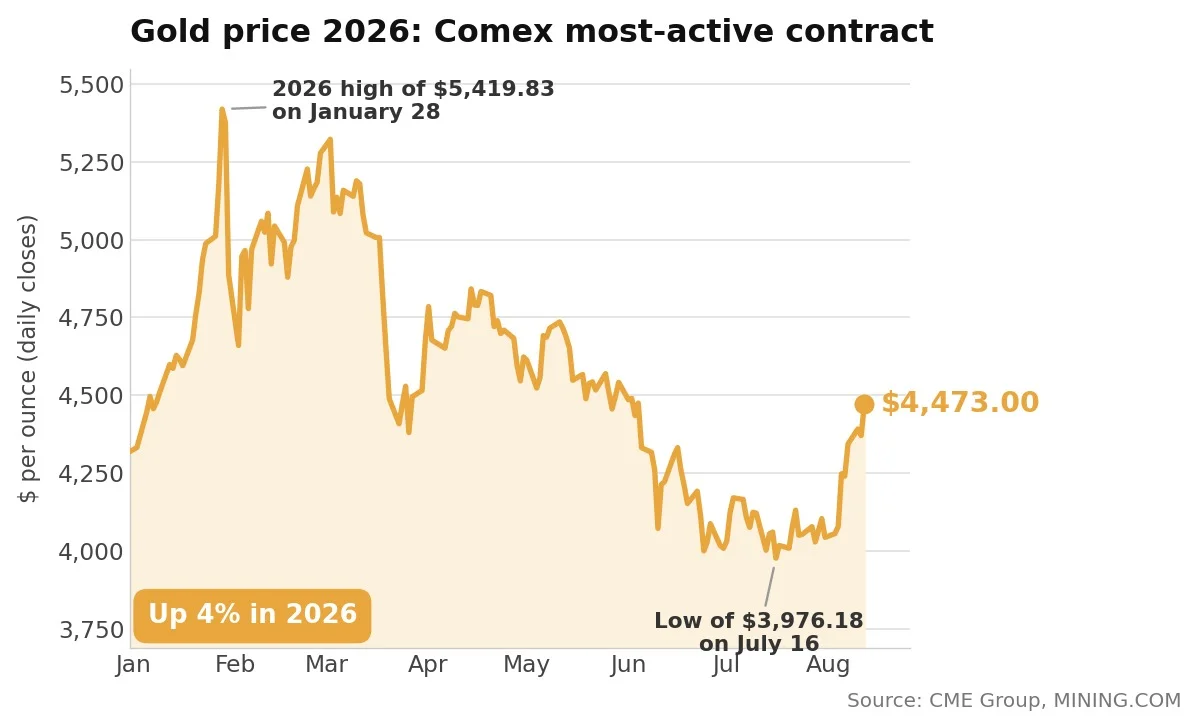
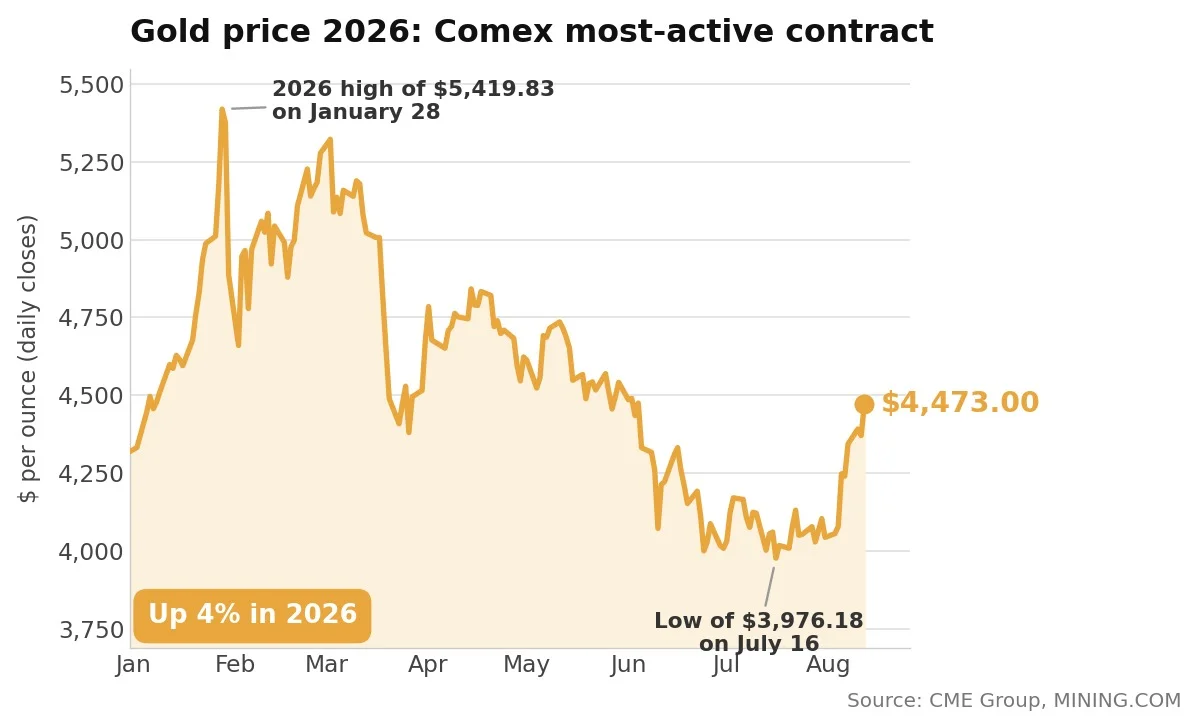
Gold prices have climbed significantly, reaching a two-month high on Wednesday, spurred by tame U.S. inflation data that lessens pressure for the Federal Reserve to implement rate hikes in the near term.
December gold futures touched $4,502.70 per ounce, the highest price seen since mid-June, and traded at $4,473.00 by early afternoon in New York, marking a 0.7% increase. Meanwhile, spot gold rose as much as 1.6% to $4,438.20 before settling at around $4,422.34, continuing the momentum from the previous day's gains. Support for gold's rally has come from increased central bank purchases, particularly from China.
Silver Market Activity
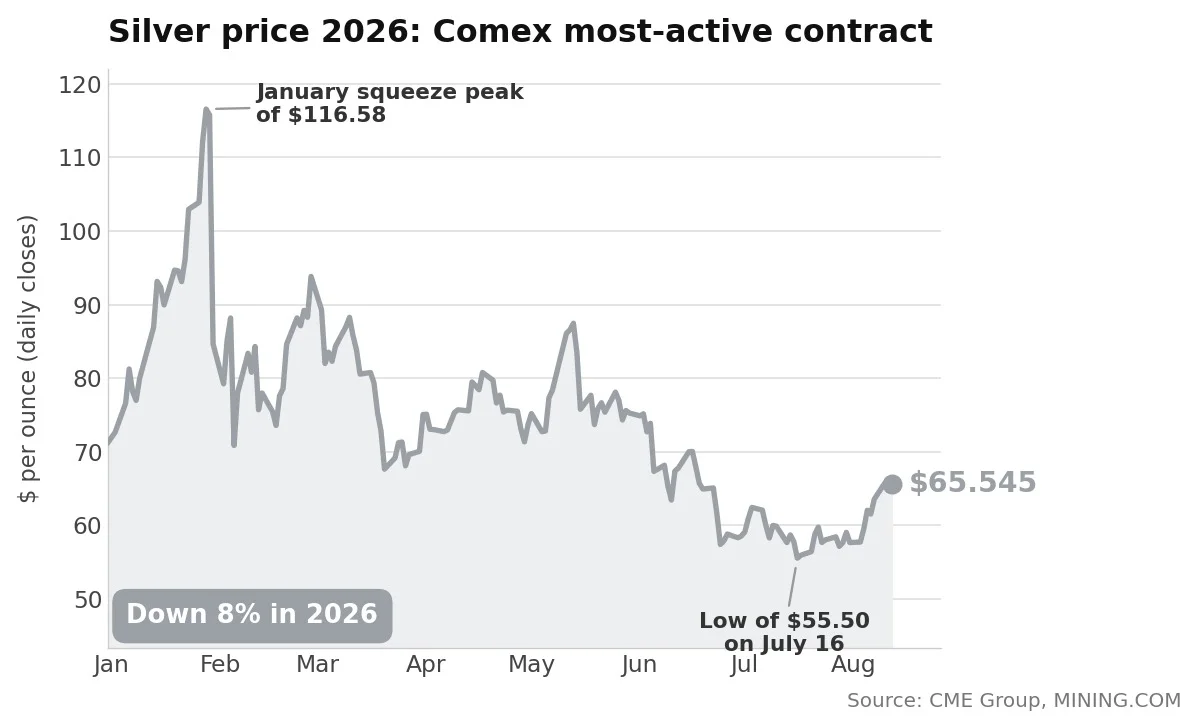
Silver also saw considerable gains with September futures up to $66.98, a 3.2% increase from a previous low, concluding the day at $65.54—0.9% higher. Spot silver ascended 2.4% to $66.25. Despite its recent rebound, silver remains down about 8% for the year due to earlier market volatility stemming from geopolitical issues. Analysts expect the silver market to remain in deficit through the remainder of 2026.
The recent recovery in silver prices can be attributed to a combination of factors, including demand from industrial applications and investment interest. This year's geopolitical tensions and uncertainties surrounding global economic conditions have historically impacted silver prices, often leading to fluctuations. If you're working in this space, understanding these drivers can help you better navigate the market's ups and downs.
In addition, the CME Group announced plans to allow 24-hour trading of its 100-ounce silver futures beginning in September, pending regulatory approval. This move comes after the success of round-the-clock trading for 1-ounce gold futures that launched in late July. Such trading flexibility could enhance liquidity in the silver market, allowing traders to respond promptly to significant price movements.
Inflation Data Supports Price Surge
Consumer prices in the U.S. recorded a 0.1% increase in July compared to the previous month and a 3.4% rise year-over-year, aligning with economists' expectations. The core CPI—which excludes food and energy—grew 0.2% on a monthly basis and 2.5% annually, matching its slowest growth rate since March 2021. This soft data coincides with a reduction in labor numbers, as the economy shed 23,000 jobs in July.
This inflation data plays a significant role in shaping market sentiment regarding Federal Reserve policy. While the numbers may suggest stability, they also indicate underlying economic fragility. Market expectations for a Fed rate hike stand at about a 40% chance for September, though expectations for October have decreased from 75% to roughly 60%. Current projections indicate a stronger possibility of an increase by December. Meanwhile, two-year Treasury yields have dipped to 4.18%, reflecting the impact of these rate expectations, while the dollar remains steady.
Ole Hansen, head of commodity strategy at Saxo Bank, noted that while gold has shown resilience, it has yet to indicate a definitive move into a bull market. He points to support around $4,200 as crucial, with monitoring required for further advances towards the 200-day moving average, which is currently just beneath $4,500. The hesitation in the market suggests that traders remain cautious, possibly waiting for more definitive signals before committing at these levels.
Mining Stocks Outperform
Gold has gained nearly 9% since late July, and silver has surged 13% over the same period. Mining stocks have surged even more aggressively, outpacing the metals themselves. This pattern isn't surprising, as mining stocks often exhibit higher volatility, which can amplify gains (or losses) depending on market conditions.
Eldorado Gold has led with a 33% rise this month, followed closely by Equinox Gold at 29%. Hecla Mining and Coeur Mining each gained 27%, Agnico Eagle also saw a 27% increase, and Newmont rose by 26%. Other notable gainers include Wheaton Precious Metals at 24%, while AngloGold Ashanti and Fresnillo both recorded a 23% uptick. Pan American Silver and Alamos Gold rose by 22% and 21% respectively, with Kinross Gold and Royal Gold following closely behind. Barrick Mining's stock increased by 11% for the month, as shares recovered from the recent $1.95 billion settlement with Newmont.
The strong performance of these stocks can be attributed to several factors. Rising commodity prices typically improve margins for miners, enhancing profitability expectations. However, this scenario also carries risk. While the returns can look attractive now, potential downturns in gold and silver prices could lead to significant pullbacks. It’s essential for investors to stay informed about ongoing developments and market conditions.
Implications and Future Outlook
The current momentum in gold and silver prices, bolstered by stable inflation data and increased central bank buying, suggests a cautious optimism in the market. Investors should consider that, while the immediate outlook appears favorable, economic dynamics can shift quickly. What this means for you is a need to stay vigilant, monitor economic indicators, and be prepared for potential volatility.
Interestingly, patterns typically seen in commodity trading suggest that price corrections are not only possible but likely as markets attempt to find equilibrium. If inflationary pressures remain subdued, the Federal Reserve might keep its hands off the interest rate throttle, further supporting precious metals. On the other hand, if inflation begins to rise again, or if geopolitical tensions resurface, the narrative could change swiftly.
This is more significant than it looks. The intertwining of monetary policy and commodity pricing could define market dynamics in the coming months. As traders and investors adjust their strategies, the potential for unexpected movements remains high.
(With files from Bloomberg)
Discussion
Sign in to join the discussion.