Barrick and Newmont have resolved their disputes over Nevada Gold Mines, with Newmont paying $1.95 billion and allowing Barrick to pursue an IPO.
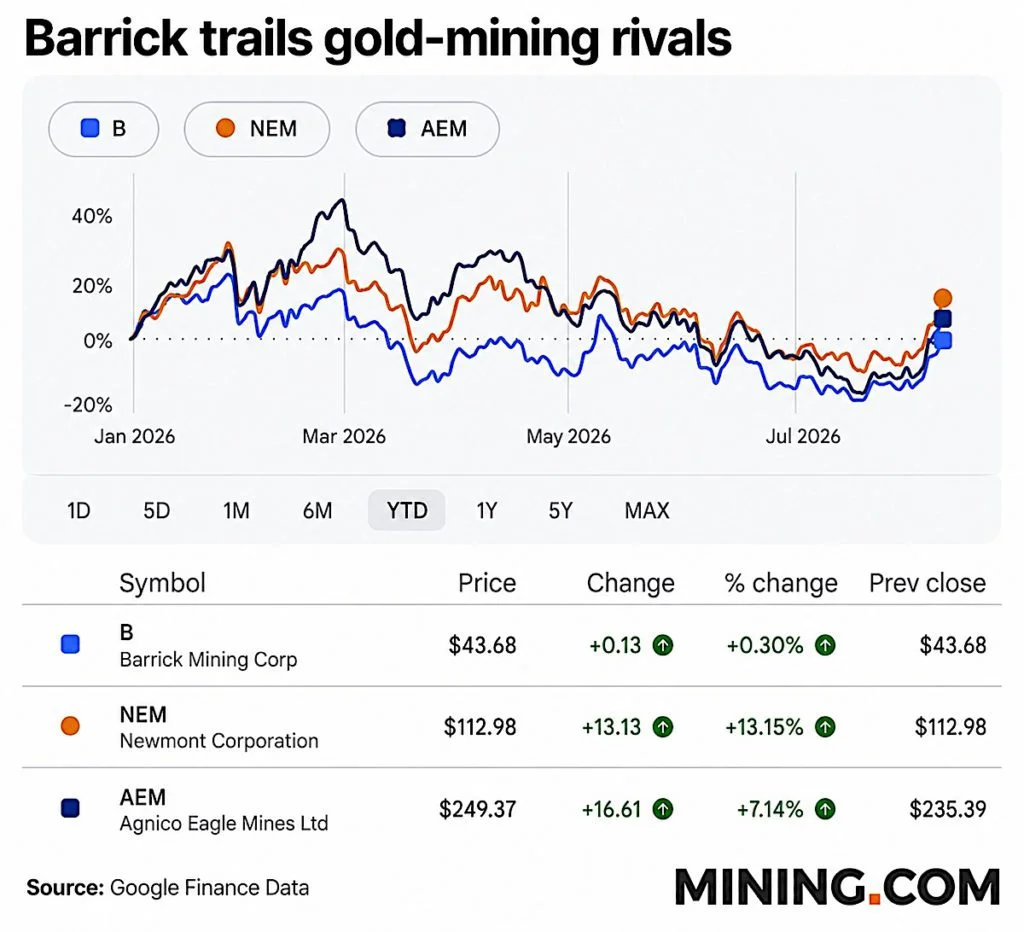
Barrick Mining (TSX: ABX)(NYSE: B) and Newmont (NYSE, ASX: NEM) have reached a resolution to their ongoing disputes concerning Nevada Gold Mines, resulting in a substantial $1.95 billion payment from Newmont to Barrick. This agreement integrates Barrick’s Fourmile project and Newmont’s Fiberline and Mike projects into the expansive Nevada Gold Mines, the world's largest gold mining complex. The resolution reflects broader themes of consolidation in the mining sector, illustrating how major players are adapting to the market's pressures and seeking to strengthen their operational synergies.
The financial transaction is set to occur within the next 30 days, and the partners have agreed to updated governance structures to enhance their collaboration. This settlement alleviates significant uncertainties between these two leading global gold miners while enabling Barrick to advance its initial public offering (IPO) plans for its North American gold assets—an imperative move as investor scrutiny intensifies. When companies in this space resolve long-standing disputes, the ripple effects can be significant, potentially influencing investor sentiment and market dynamics.
Cost Management and Earnings Performance
The resolution of this dispute comes at a critical time when Barrick has reported second-quarter adjusted earnings aligning with analysts’ forecasts. The company has faced increased production costs and a retrospective tax penalty in Mali, which offset a surprisingly strong gold output. Such financial pressures highlight the intricate balancing act companies must perform—managing costs while ensuring operational efficiency is vital for maintaining profitability in a sector characterized by volatility.
Barrick posted an adjusted profit of $0.82 per share for the quarter ending June 30, meeting analyst expectations. This performance reflects both resilience and the ability to navigate challenges. Gold production for the period reached 796,000 ounces, marking an 11% increase from the previous quarter, and surpassing guidance of 730,000 to 770,000 ounces. Barrick attributed this success to effective maintenance and a rapid production ramp-up at key sites, such as Loulo-Gounkoto and Pueblo Viejo. Such increases indicate strong operational management, which is essential in an industry where production constraints often threaten output.
Despite pressures including rising fuel prices, Barrick has managed its gold cost of sales at $1,993 per ounce, while all-in sustaining costs stood at $1,866 per ounce. You have to commend Barrick for controlling costs in a climate plagued by rising operational expenses. Operating cash flow increased notably, rising 28% year-over-year to $1.7 billion. Such growth in cash flow not only supports current operations but also positions Barrick to take advantage of future opportunities, whether through acquisitions or strategic investments.
The company has retained its production and cost guidance for the full year while adjusting its expected capital expenditures to a range of $3.8 billion to $4.2 billion. This forecast speaks to Barrick's strategy of careful financial planning, allowing it to remain flexible in a challenging market while simultaneously preparing for the future. Investing in capital projects might be risky, but in mining, it's often necessary to stay competitive.
Pressure Surrounding IPO and Leadership Changes
Barrick's move toward an IPO remains on schedule for completion by year-end, with Mark Hill anticipated to assume the role of CEO of the new entity following the separation. The urgency surrounding leadership assignments during an IPO cannot be overstated; naming a CEO within this timeline has been critical to addressing investor concerns about Barrick’s strategic direction. An effective leader is not just a figurehead but a critical asset to instill confidence in potential investors.
Frustration has surfaced among shareholders, with Benoit Gervais, a portfolio manager at Mackenzie, openly suggesting that Barrick’s chairman, John Thornton, should step down. "It would be nice to have a graceful exit of this current chairman," Gervais remarked, underscoring the need for fresh leadership. (And this is the part most people overlook: leadership perception can dramatically influence a stock's trajectory.)
This IPO could represent a defining moment for Thornton after over a decade in leadership, characterized by Barrick's lagging stock performance relative to its peers. With Agnico Eagle Mines overtaking Barrick as the second-largest gold producer last year, the pressure on Thornton to revitalize Barrick's standing heightens. Stock performance is a barometer of market trust, and when confidence wanes, the ramifications can echo through the entire enterprise.
Following the leadership changes—including Thornton’s decision to replace longtime CEO Mark Bristow—Hill's appointment places him in a vital position to unlock value from Barrick’s premier assets and restore investor confidence. Securing the right leadership during pivotal transitions is critical, especially in a highly competitive landscape where yesterday’s strategies may no longer suffice.
Implications and Future Outlook
The resolution of the dispute between Barrick and Newmont is more significant than it looks. This agreement not only stabilizes their relationship but also positions both companies for greater efficiency at Nevada Gold Mines. Investors will be closely monitoring how the merger of these projects translates into future production and profitability.
As Barrick moves toward its IPO, the perceived stability of its management and operations will weigh heavily on its market performance. If you’re working in this space, understanding these dynamics is essential for gauging potential investment opportunities—whether it’s in Barrick, Newmont, or their competitors. The implications extend beyond just the two companies; how well they execute post-dispute will likely influence industry trends as other firms assess their own strategic moves.
Looking ahead, the larger question remains: can Barrick translate this newfound collaboration and its management changes into sustained shareholder value? The response to that question might only be fully understood once the IPO completes and the market reacts to the company's operational and strategic pivots. What’s clear is that the gold mining sector won't stay static; adaptability is the key to navigating its challenges.
Discussion
Sign in to join the discussion.