Christopher O'Connor has been appointed head of AIG's North American cyber and professional liability divisions, succeeding James Hebert amid shifting market dynamics.
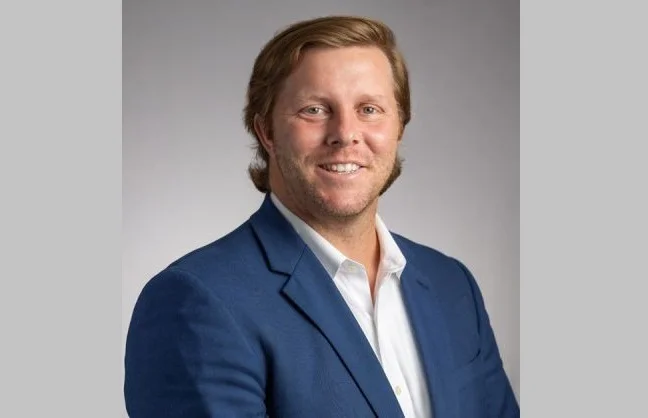
American International Group (AIG) has appointed Christopher O'Connor as the new head of professional liability and cyber insurance for North America, succeeding James Hebert, who recently departed from the company. This internal promotion capitalizes on O'Connor's extensive background in financial lines and corporate accounts—critical areas where brokers face intricate market challenges that have only intensified in recent years.
Background on Christopher O'Connor
O'Connor's career trajectory within AIG is a testament to his deep understanding of these crucial insurance sectors. He most recently directed corporate accounts for AIG's professional liability and cyber insurance, focusing on large financial institution clients and their complex risk needs. The shift to this leadership role comes at a pivotal moment, as both professional liability and cyber insurance markets are grappling with mounting complexities and heightened risks.
Prior to his recent role, O'Connor managed AIG's financial institution cyber segment, where he took the lead in crafting nuanced risk programs for major clients. This kind of hands-on experience positions him uniquely to navigate the challenges his new role contains. If you're working in this space, you know that the landscape is turbulent, with evolving threats prompting insurers to innovate and adapt constantly.
Justin Gilmore, who oversees financial lines for AIG in North America, shared this news via LinkedIn. He highlighted O'Connor's extensive experience in underwriting and leadership within the professional liability and cyber sectors. Gilmore's endorsement serves as an implicit acknowledgment of the strategic decisions AIG is making in a crowded and competitive field.
O'Connor's Educational Credentials and Early Career
O'Connor's academic background further reinforces his capabilities. He holds a Master of Professional Studies in Insurance Management and a Bachelor of Science in Economics, both from Columbia University. His deeper knowledge of economic and financial concepts enriches his role, grounding his approach in both theoretical and practical knowledge. Moreover, having served as a guest lecturer on cyber insurance at Columbia, O'Connor's influence extends beyond his practical work—he's actively involved in shaping the next generation of insurance professionals. This is something to be admired.
The Current Insurance Climate
The current landscape for both cyber and professional liability insurance is notably challenging and requires strong leadership amid shifting dynamics. Gallagher's 2026 Cyber Insurance Market Outlook indicates that while overall cyber pricing has reverted to early-2021 levels due to increased competition and capacity, claims complexity is escalating dramatically. Brokers are now tasked with adapting to a barrage of AI-enhanced threats that are reshaping policy coverage and limits. That’s not something any old strategy can address effectively.
The U.S. House Committee on Homeland Security has reported alarming statistics, with an average cost of a data breach projected to reach about $10 million by 2025. Such figures underscore the necessity for innovative approaches to risk management and insurance solutions that can meet the evolving needs of clients who are increasingly at the mercy of high-tech attacks. (And this is the part most people overlook: the sheer scale of financial impact on organizations involved in data breaches isn’t just a number; it can be a deal-breaker for numerous businesses.)
Stresses in Professional Liability Insurance
In the professional liability realm, specifically within directors and officers (D&O) insurance, the market has witnessed declining premiums for four uninterrupted years. Direct premiums have suffered a steep decline from nearly $15 billion in 2021 to just above $10 billion in 2025, according to reports from AM Best. These numbers tell a story of fierce competition leading to lowered rates, but the implications behind these figures are much more complex.
Additionally, a June 2026 report from AM Best raised concerns about increasing pressures on underwriting margins, revealing structural vulnerabilities within the competitive landscape. This situation can create a dangerous balance where lowered premiums lead to more austere underwriting criteria, increasing risks for insurers and their clients alike.
Implications for AIG and the Industry
O'Connor's ascent to leadership at AIG comes during a time when both cyber and professional liability insurance need agile and informed decision-makers. His appointment signals AIG’s commitment to addressing the intricate needs of large financial institutions while navigating an environment marked by rapid technological advancements and evolving threats.
The implications of these market conditions are profound. Insurers must not only recalibrate their pricing strategies but also refine their policy offerings to accommodate heightened risks. The trend toward AI and data-driven analytics isn't just a buzzword; it's a necessity for survival. As O'Connor steps into this new role, expectations will be high for him to guide AIG through these turbulent waters.
In a climate where clients demand more from their insurers, O'Connor’s track record and intimate knowledge of the insurance market may position AIG advantageously—as long as it manages to navigate the aforementioned complexities effectively. The road ahead isn't going to be easy, but it's clear that AIG is betting on experience and expertise to lead the charge in a challenging insurance market.
Discussion
Sign in to join the discussion.